[Planet watching]
2026–2027 Mercury and Venus observing calendar — when and where to look
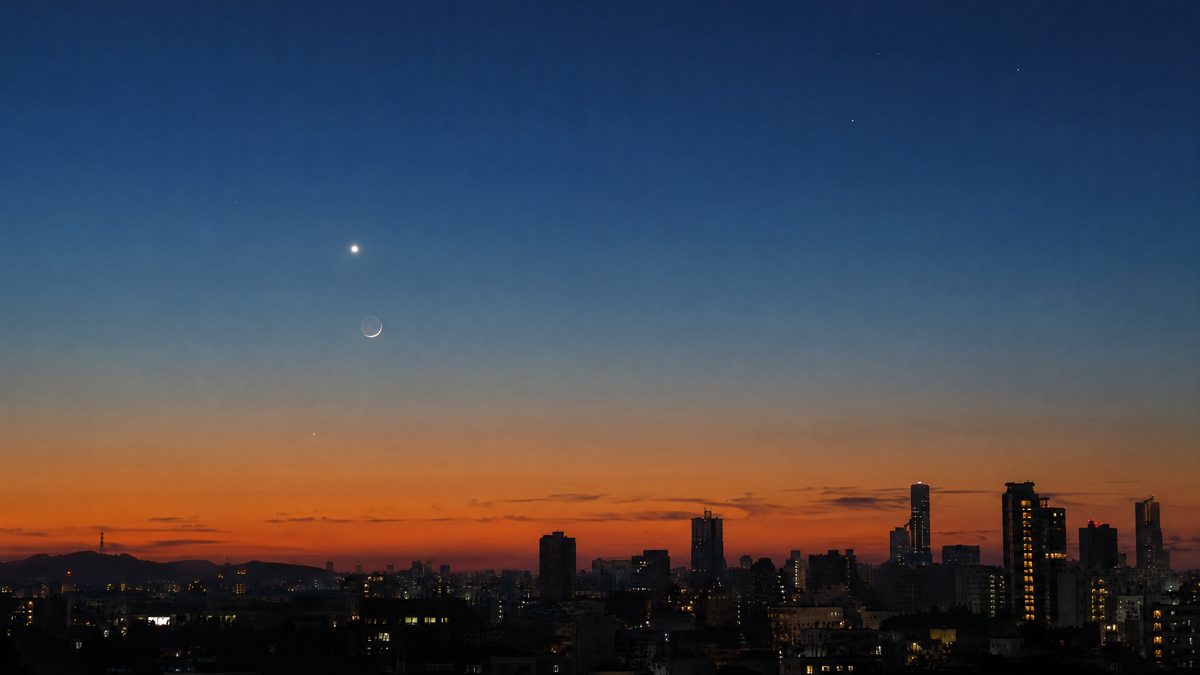
Mercury and Venus dates for late 2026 to mid-2027 in UTC — Venus's switch to the morning sky, five Mercury chances, and which ones favour each hemisphere.
For most of the summer of 2026 a brilliant point of light hung in the western sky after sunset. By mid-October it has slipped into the glare, and in a few weeks it will be back — this time in the east, before dawn. Mercury plays the same game on a much tighter schedule, which is why many people have never knowingly seen it. The physics is simple; what trips people up is the calendar.
This guide lays out the dates for Mercury and Venus from autumn 2026 to mid-2027, all in UTC, and adds the one thing a list of dates leaves out: whether a given apparition is any good from where you live. The same event can be easy from Sydney and nearly impossible from London, and the reverse happens a few months later.
Mercury and Venus in one rule
Both planets orbit inside Earth's orbit, so they never stray far from the Sun in our sky. When a planet sits east of the Sun, it appears in the west after sunset; when it sits west of the Sun, it rises in the east before dawn. Three terms cover almost everything in the calendar below.
| Term | Meaning | What you see |
|---|---|---|
| Greatest elongation | Widest gap from the Sun | Easiest to find |
| Inferior conjunction | Between Earth and Sun | Not visible |
| Superior conjunction | Behind the Sun | Not visible |
Elongation is simply the angle between the Sun and the planet. Venus can reach about 47°, enough to stay up for hours after sunset. Mercury never gets much past 20–28°, so it hugs the horizon in twilight. For Venus it is enough to know the month; for Mercury, you need the week.
Why the same date favours one hemisphere
Elongation is only half the story. The other half is the angle the ecliptic — the Sun's path, which the planets follow closely — makes with the horizon at dusk or dawn.
- When the ecliptic stands steeply, a planet 20° from the Sun sits high above the horizon.
- When it lies flat, the same 20° is spent mostly sideways, and the planet stays buried in the murk.
At mid-northern latitudes the ecliptic is steep on spring evenings and autumn mornings, and flat on autumn evenings and spring mornings. South of the equator the seasons flip, so the pattern flips too. That is why the tables below carry a separate verdict for each hemisphere.
The Venus calendar, 2026–2027
Venus reached greatest eastern elongation on 15 August 2026 at about 06:00 UTC, 45.9° from the Sun. It was a far better show in the south: at the end of civil twilight that evening Venus stood close to 40° up from Sydney, against only a few degrees from London.
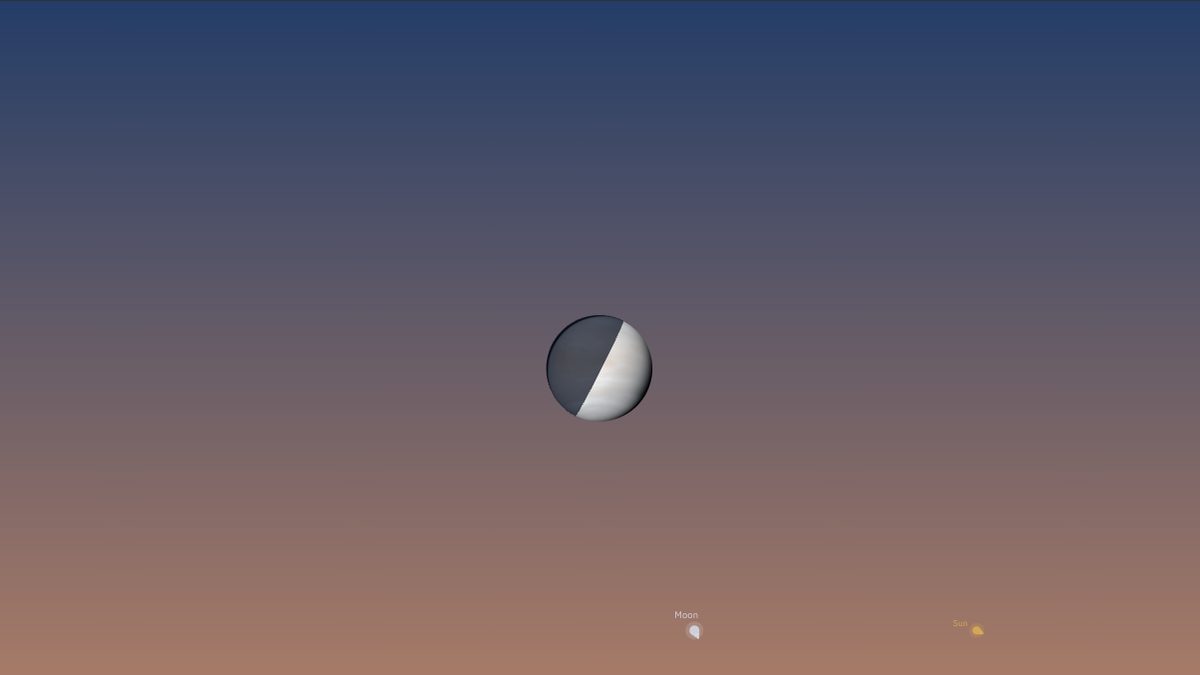
Since then it has been sliding back toward the Sun. By mid-October observers in the northern hemisphere have effectively lost it, while from Sydney or Cape Town it lingers low in the west for a little longer.
| Date (UTC) | Venus | Where to look |
|---|---|---|
| 24 Oct 2026, ~03:00 | Inferior conjunction | Not visible |
| Early November | Returns before dawn | Low in the east |
| Late November | Greatest brilliancy, about −4.9 | East before sunrise |
| 3 Jan 2027, ~19:00 | Greatest elongation west, 47.0° | South-east or east before dawn |
| Spring 2027 | Morning star | East, slowly lower |
| Mid-August 2027 | Superior conjunction | Not visible |
A few notes on reading this:
- At the 24 October inferior conjunction Venus passes roughly 6° from the Sun — far too close for safe viewing. From that day on it is a morning object.
- In early November it rises only a short time before the Sun, so a clear eastern horizon matters more than anything else.
- Around greatest brilliancy Venus is close to Earth, so it shows a slender crescent while shining at its brightest.
- Around the January elongation it is easy from both hemispheres. At the end of morning civil twilight on 3 January it stands roughly 20° up from London and close to 30° from Sydney and Cape Town.
So for the coming winter and spring, Venus belongs to the dawn, not the dusk.
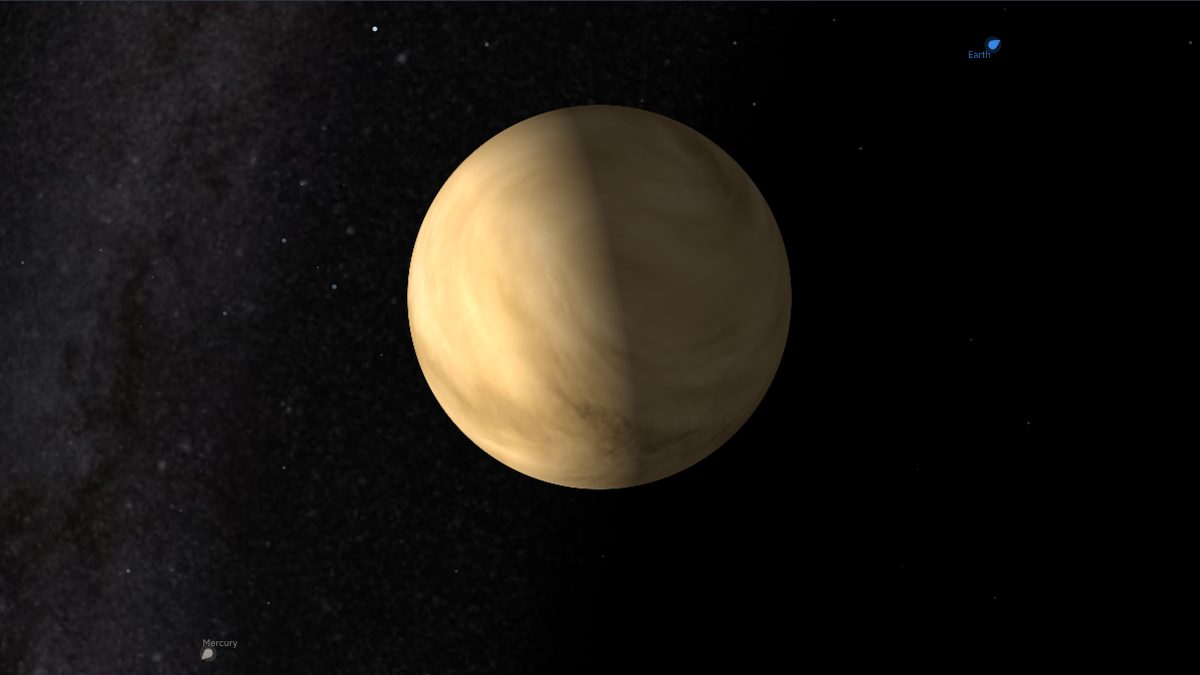
Looking down on the solar system makes the switch obvious. Venus is overtaking Earth on the inside track; run the clock forward in NowSky's orbit view and you can watch it cross to the west of the Sun, which is exactly why it reappears in the morning sky.
The Mercury calendar: which chances to take
Mercury circles the Sun in about 88 days and swings between the evening and morning skies several times a year. Not every swing is equal, and the hemisphere rule above does most of the sorting.
| Date (UTC) | Greatest elongation | Northern (London, New York) | Southern (Sydney, Cape Town) |
|---|---|---|---|
| 12 Oct 2026 | 25.2° E, evening | Poor | Good |
| 20 Nov 2026 | 19.6° W, morning | Good | Poor |
| 3 Feb 2027 | 18.3° E, evening | Fair | Poor |
| 17 Mar 2027 | 27.6° W, morning | Poor | Good |
| 28 May 2027 | 22.9° E, evening | Fair | Fair |
The pattern is worth noticing: the widest elongation is not automatically the best. On 12 October Mercury was 25° from the Sun, yet from Britain it was only about 3° up at sunset because the autumn evening ecliptic lies so flat. From Australia the same evening was the best evening apparition of the year. Five weeks later the roles reverse — the 20 November morning elongation is smaller, but the steep autumn-morning ecliptic lifts Mercury clear of the horizon for northern observers. Venus is in the eastern sky at the same time, so late November mornings offer a neat routine in the north: find Venus first, then look lower and closer to the horizon for Mercury.
The March 2027 morning apparition is the southern hemisphere's counterpart, with Mercury standing around 20° up at dawn from Sydney but barely clearing the horizon from London. The late-May evening is reasonable from both hemispheres, and it is the best evening chance for northern observers this season.
How to actually find Mercury
Once you have picked a date, the routine on the night is short.
- Choose an open horizon. Buildings or hills to the west (evening) or east (morning) make it almost impossible.
- Get the timing right. In the evening, start about 30–45 minutes after sunset, when the sky turns deep blue. In the morning, look 45–30 minutes before sunrise.
- Sweep low above the point where the Sun set or will rise. Mercury looks like a small, slightly warm-coloured point.
- Use binoculars to find it, then your eyes to confirm it. In bright, low twilight binoculars are much faster.
- Do not rely on the elongation date alone. Mercury looks much the same for several days either side, so pick the clearest evening or morning and try more than once.
The phrase "low in the west" covers a lot of sky. Checking the scene beforehand helps: set your city and the time in NowSky's sky view, and it shows how far Mercury sits from the sunset point and how many minutes of usable twilight you have.
Frequently asked questions
When does Venus look like a crescent?
Venus shines by reflected sunlight, so it shows phases. The closer it comes to passing between Earth and the Sun, the larger it appears and the thinner the lit part becomes. This season the November mornings, a few weeks after the 24 October inferior conjunction, are a good time to see a crescent in binoculars or a small telescope — always before sunrise.
Can Mercury be seen with the naked eye?
Yes. At its best it outshines most bright stars. Because it always sits low in twilight, finding it with binoculars first and then confirming it by eye is usually the quickest way.
Final thoughts
After the 24 October 2026 inferior conjunction, Venus becomes a morning star until mid-2027, with its widest showing on 3 January. For Mercury, northern observers should aim for the 20 November morning and the late-May evening, while southern observers have the March 2027 morning to look forward to. Mercury rewards persistence more than any other planet, and in my view the first sighting is worth the few missed mornings it usually takes.
Open the screens from this post
- Where Venus is nowVenus in the sky view
- Venus in the orbit viewEarth, Venus and the Sun as they really are