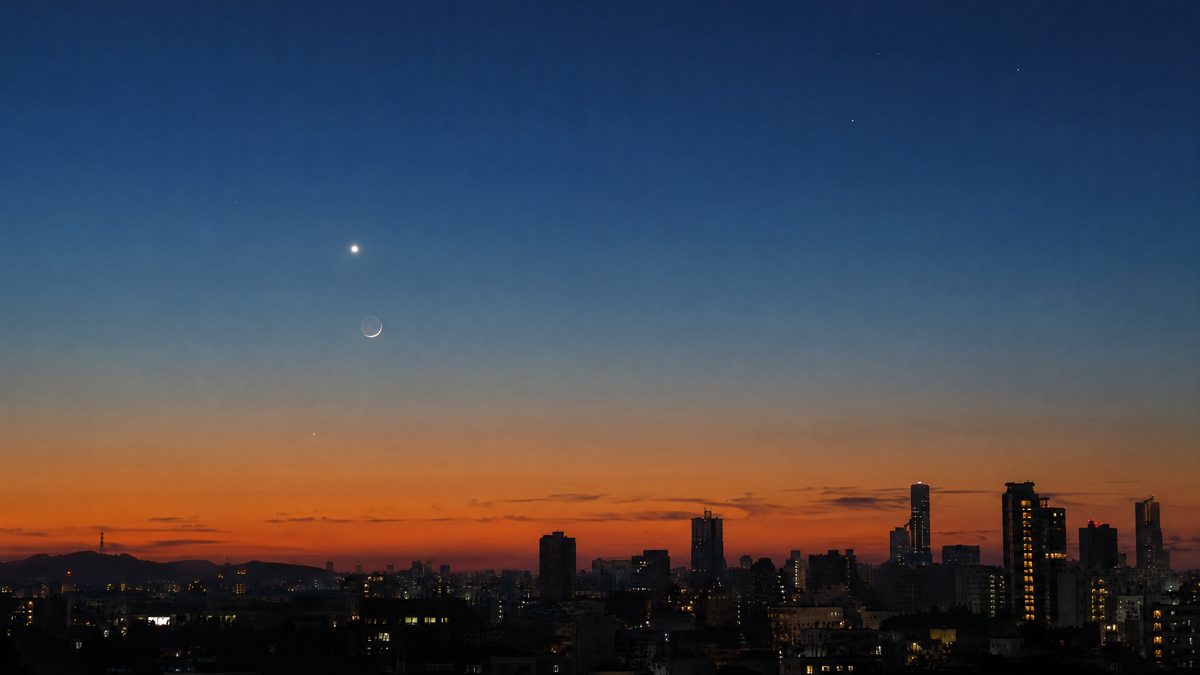
[Planet watching]
Jupiter observing for beginners — naked eye, binoculars and a small telescope
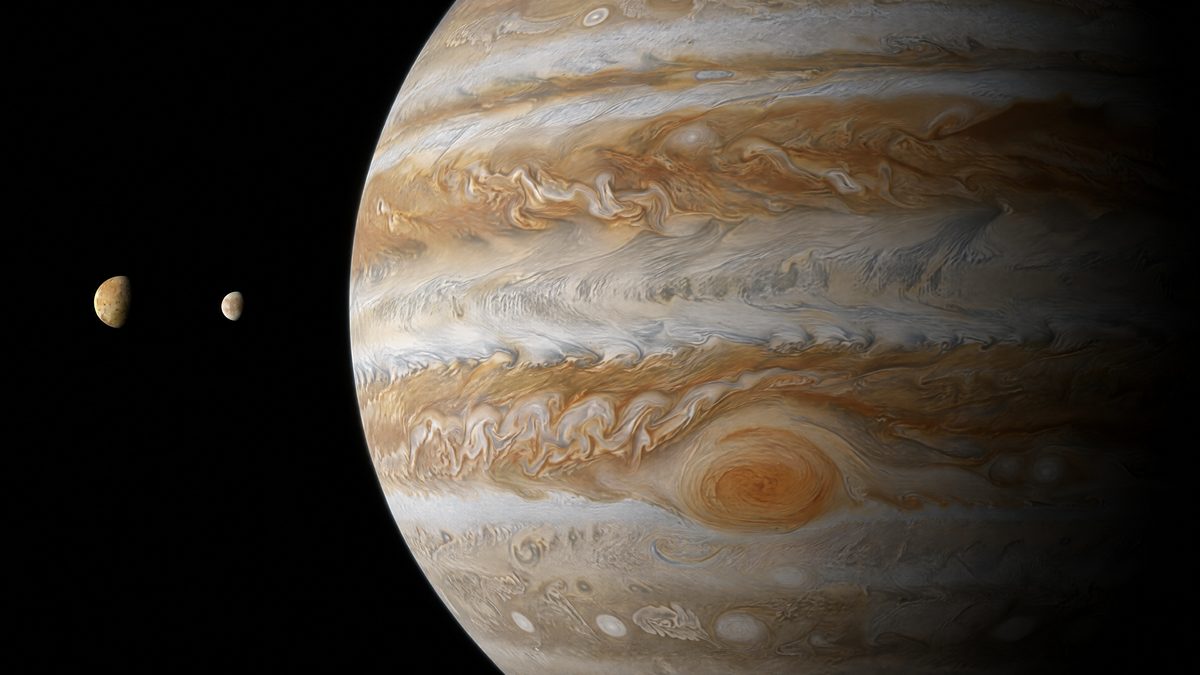
A beginner's guide to Jupiter observing — finding it by eye, spotting the Galilean moons in binoculars, and the best months around the February 2027 opposition.
Late at night there is sometimes one point of light that stands out: brighter than everything around it and oddly steady, without the restless twinkle of the stars nearby. More often than not, that point is Jupiter. Of all the planets, Jupiter observing has the lowest barrier to entry. It is easy to find by eye, and an ordinary pair of binoculars is enough to show the same four moons Galileo recorded more than four hundred years ago.
This guide works upward from the naked eye to binoculars and then a small telescope, describing what each one shows, and sets out when and where to look between autumn 2026 and spring 2027. The coming winter in the northern hemisphere, which is summer in the southern, is a season when Jupiter is up for most of the night, so it is a good moment to start.
Finding Jupiter with the naked eye
At its brightest, Jupiter reaches about magnitude −2.9. The only natural objects in the night sky brighter than that are the Moon and Venus, so the brightest "star" visible in the middle of the night is usually Jupiter.
The general clues that separate a planet from a star apply here too: planets twinkle less, they sit along the ecliptic (the path the Sun and Moon follow across the sky), and over a few weeks they shift against the background stars. For Jupiter it helps to add one more piece of information: which bright star is its neighbour this year.
Through late 2026 and early 2027 Jupiter sits in western Leo, a short distance west of Regulus, the brightest star in the constellation. The task is simply to find something near Regulus that is far brighter than Regulus. Seen side by side, the comparison is instructive: Jupiter outshines the first-magnitude star many times over, and its light looks calmer. Checking the gap between the two every few nights also makes the planet's slow drift against the stars visible.
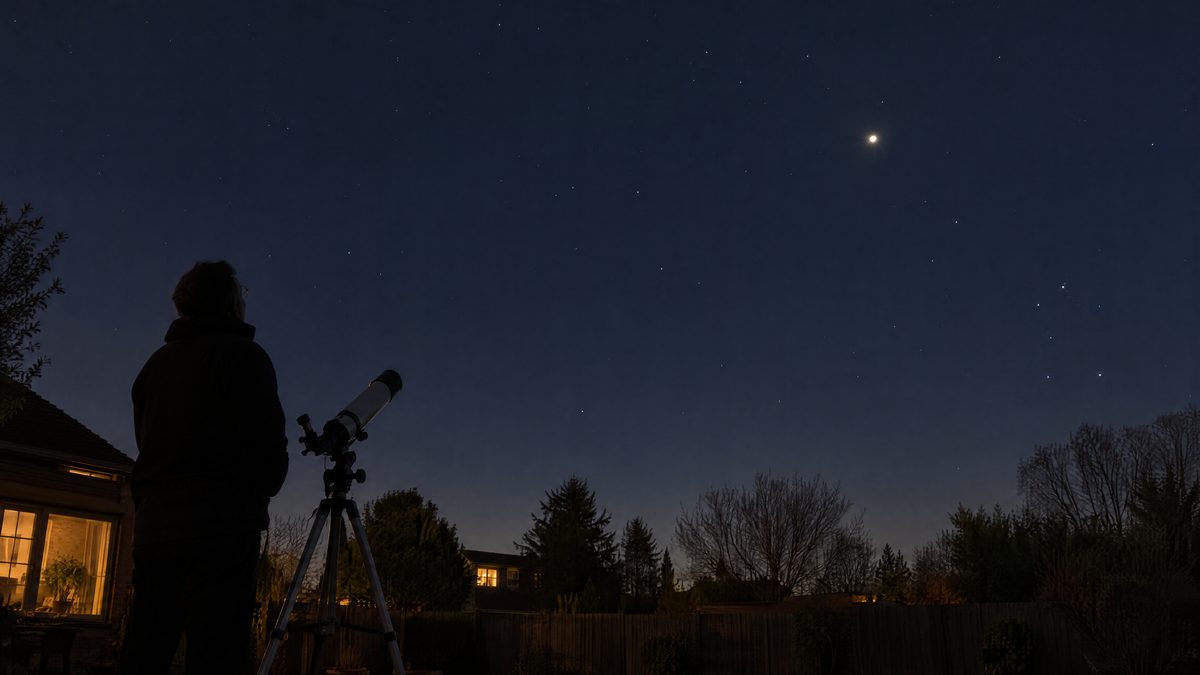
In October Jupiter is a morning object. Before sunrise it is the brightest point in the eastern sky, for observers in London and New York as well as in Sydney and Cape Town. As autumn turns to winter in the north it rises earlier each night, and by the end of the year it is clear of the eastern horizon well before midnight. When searching for it the first time, wait until it is two or three fist-widths above the horizon. Low down, buildings, haze and turbulent air dim it and make it shimmer.
When to see Jupiter in 2026–2027: the opposition
The key date in any Jupiter season is opposition, when Earth lies directly between the Sun and Jupiter. Jupiter then rises around sunset, stays up all night and sets around sunrise. It is also close to its nearest point to Earth, so it appears largest and brightest.
The timeline for this season looks like this:
| When | Situation | Best time to look |
|---|---|---|
| October 2026 | Morning sky | Before dawn, east |
| November 2026 | Rising around midnight | After midnight |
| Mid-December 2026 | Retrograde motion begins | Late evening onward |
| 11 February 2027 | Opposition | All night |
| May 2027 | High at dusk | Early evening |
| Late August 2027 | Conjunction with the Sun | Not visible |
Opposition falls at 00:21 UTC on 11 February 2027. Jupiter will then be in Leo, about 8° west-northwest of Regulus, shining at about magnitude −2.5 with a disc 45 arcseconds across. In local terms that is the evening of 10 February in New York.
How high it climbs depends on latitude. Jupiter will be roughly 15° north of the celestial equator, so at its highest point it stands a little over 50° up in the south from London and around 64° from New York. From Sydney and Cape Town it culminates about 40° above the northern horizon, which is still comfortably high. Wherever you are, the pattern is the same: October and November reward early risers, December brings it into the late evening, January to March puts it in view from dusk to dawn, and by April and May it is an early-evening planet. Jupiter reaches conjunction with the Sun on 31 August 2027 and disappears into the twilight for a while.
How to see Jupiter's moons with binoculars
Once Jupiter is found, the next step is a pair of binoculars, and the first target worth trying is its moons.
As of April 2026, 115 moons of Jupiter are known, but the ones within reach of binoculars are the largest four: Io, Europa, Ganymede and Callisto. Galileo Galilei recorded them in January 1610, and they are known as the Galilean moons. Each shines at around fifth magnitude, bright enough to be seen in ordinary binoculars even from a light-polluted city. The difficulty with the naked eye is not their faintness but the glare of Jupiter right beside them.
A few habits make them much easier to see:
- Hold the binoculars steady. Shaking hands smear the moons into Jupiter's glow. Resting elbows on a wall or a car roof helps a great deal, and a tripod adapter helps even more.
- Centre Jupiter and look to either side. One to four small points will line up along a thin straight line running through the planet.
- Fewer than four is normal. A moon passing in front of Jupiter, behind it or into its shadow will vanish for a while.
- Rule out background stars. A real moon lies on that line close to Jupiter, and the next night it will still be travelling with the planet.
At first the points closest to the disc can be hard to pick out. Moving Jupiter slightly off-centre in the field, or simply keeping an eye at the eyepiece for twenty or thirty seconds, usually helps; as the eye adapts, points that were invisible start to appear. A quick sketch of the arrangement, just dots in a notebook, makes a later comparison much more interesting.
Why the moons are in a different place every night
Looking again with the same binoculars the next night, the pattern of dots will have changed completely. The moons are circling Jupiter quickly.
| Moon | Orbital period |
|---|---|
| Io | about 1.8 days |
| Europa | about 3.6 days |
| Ganymede | about 7.2 days |
| Callisto | about 16.7 days |
We see these orbits almost edge-on, so moons travelling in circles appear to slide back and forth along a straight line. Io moves fast enough that its position shifts noticeably within a single evening. The orbital periods of Io, Europa and Ganymede are also locked together in an almost exact 1:2:4 ratio.
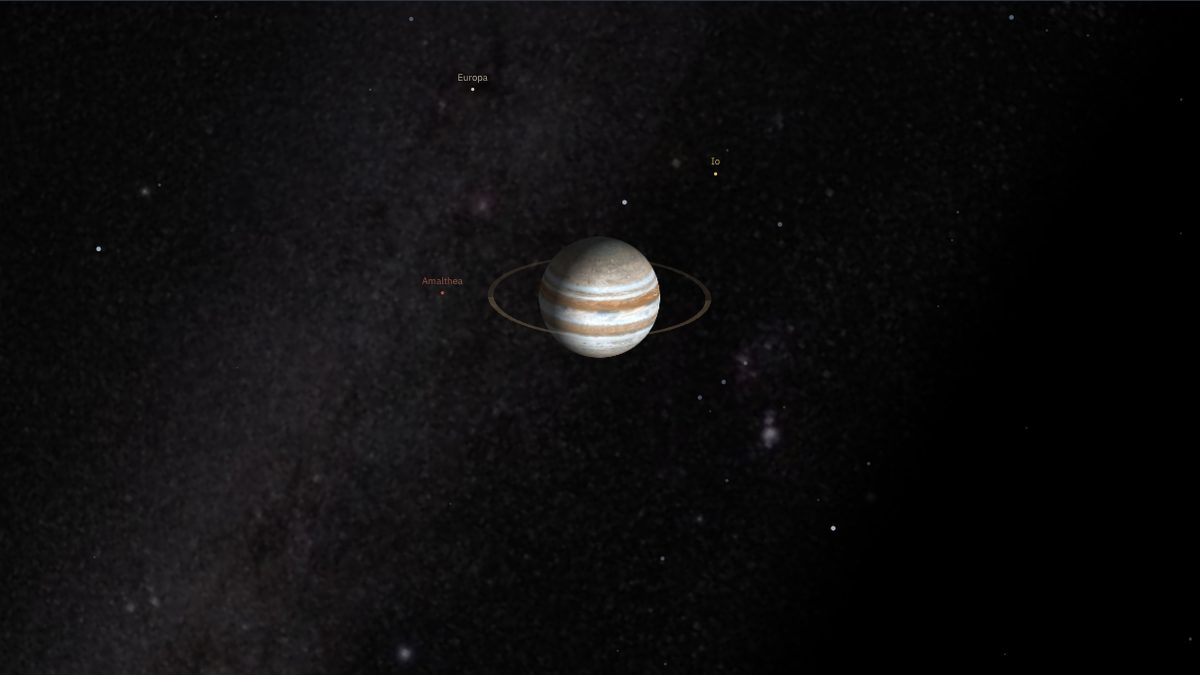
In NowSky's orbit view, following Jupiter and letting time run slowly shows the four moons circling at their own speeds, seen from above. The straight-line arrangement in the binoculars then reads clearly as circular orbits viewed side-on. In the sky view, selecting Jupiter brings up a card with tonight's rising and setting times for the chosen location, which makes it easy to decide when to go outside. Sketching the plan before stepping out saves time fumbling around in the dark.
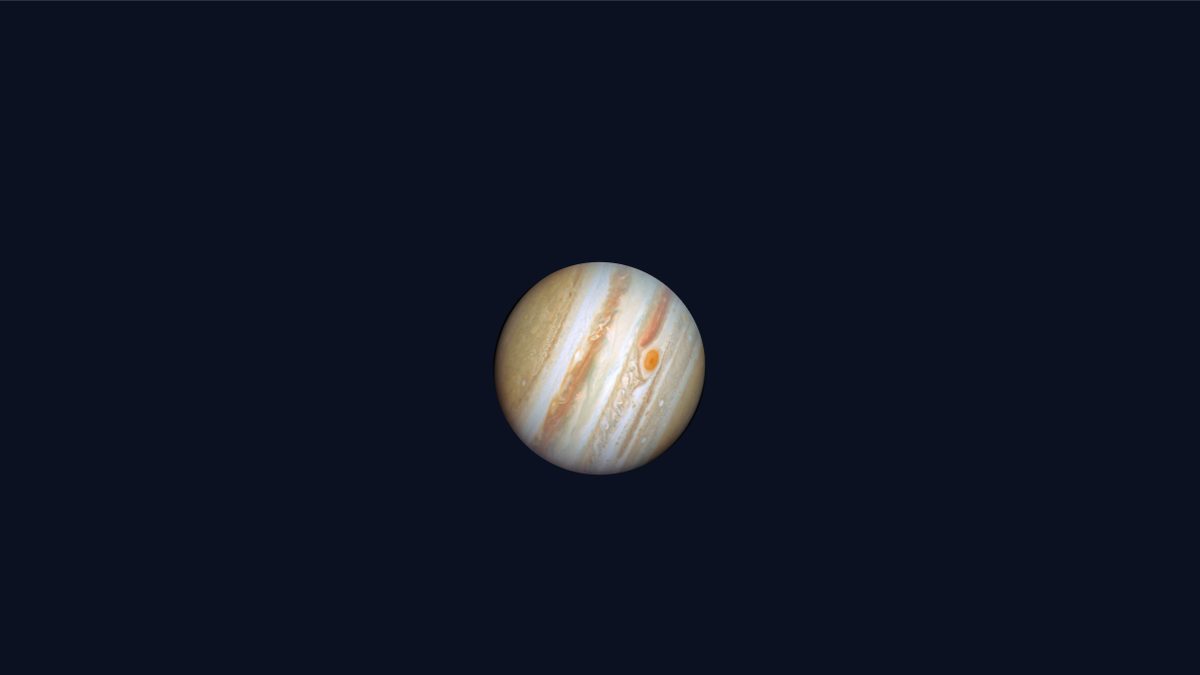
A small telescope, around 60 to 80 mm aperture, takes things a step further. Two dark belts crossing the disc are usually the first features to show, and on nights of steady air the Great Red Spot, a storm larger than Earth, can appear as a pale reddish smudge. Jupiter turns once every 9.9 hours, so watching for an hour or two is enough to see the spot drift across the disc.
Frequently asked questions
What binoculars work best for Jupiter observing?
Standard 7× to 10× binoculars with objective lenses of 35 to 50 mm are enough to show the Galilean moons. Keeping the view steady matters more than extra magnification.
Can Jupiter be seen from a city?
Yes. Jupiter is one of the brightest objects in the night sky, so it is easy to see by eye even in heavily light-polluted centres, and the Galilean moons remain visible in binoculars.
Why can't I see the Great Red Spot in my telescope?
This is common. For roughly half of each rotation the spot is on the far side of the planet, and the storm has been shrinking over the decades, so in a small telescope it may only show on nights of very steady air. Getting used to the belts first and trying again over several nights is the usual approach.
Final thoughts
Jupiter observing starts with finding the planet by eye, counting its four moons in binoculars, and seeing the next night that they have moved. This winter and spring, centred on the opposition of 11 February 2027, is the best part of the current season. In my view, the moment of first recognising four tiny points strung out beside Jupiter in a pair of hand-held binoculars is a small share in the surprise Galileo must have felt.
Open the screens from this post
- See where Jupiter is nowSky view
- Jupiter and its moonsGalilean moons in the orbit view