[Stargazing]
Meteor shower calendar 2026–2027 and how to watch one
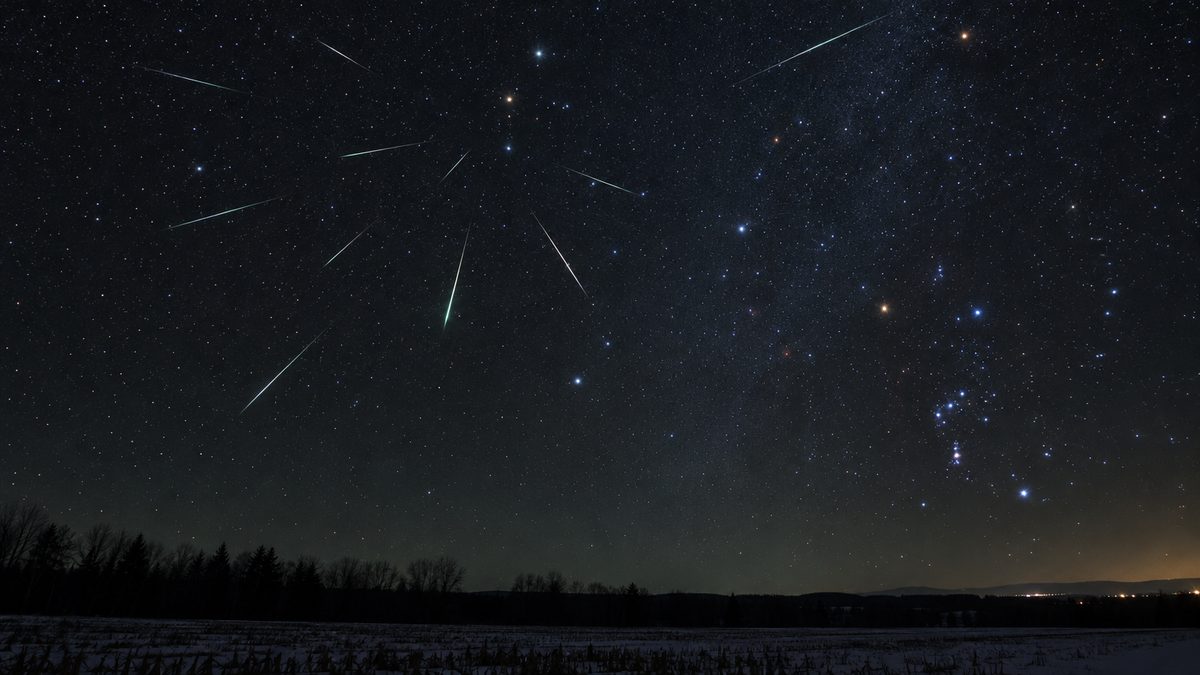
A meteor shower calendar for late 2026 to 2027 with moonlight conditions, plus how to watch a meteor shower — radiant, best hours, where to look and what to bring.
A news story promises "up to 150 meteors an hour", someone goes outside around ten in the evening, and after an hour of staring they have seen two or three. This is one of the most common first experiences with meteor showers. The date is rarely the problem. The usual culprits are the hour, the Moon, and where the eyes are pointed. A meteor shower calendar helps only alongside a few simple rules.
This guide explains what a meteor shower is and how to read the hourly numbers, then lists the major showers from November 2026 through summer 2027 with the moonlight conditions for each. The last part covers timing, direction and what to bring. By the end, it should be easy to put the next shower on the calendar and decide what time to step outside.
Why meteor showers return on the same dates
A meteor is a speck of dust, often no bigger than a grain of sand, burning up as it hits Earth's atmosphere at high speed. Each time a comet passes near the Sun it sheds this kind of debris along its orbit. When Earth crosses one of these dusty trails, the number of meteors rises well above the usual background: that is a meteor shower. Earth reaches the same point in its orbit on almost the same date every year, so each shower comes back on roughly the same night.
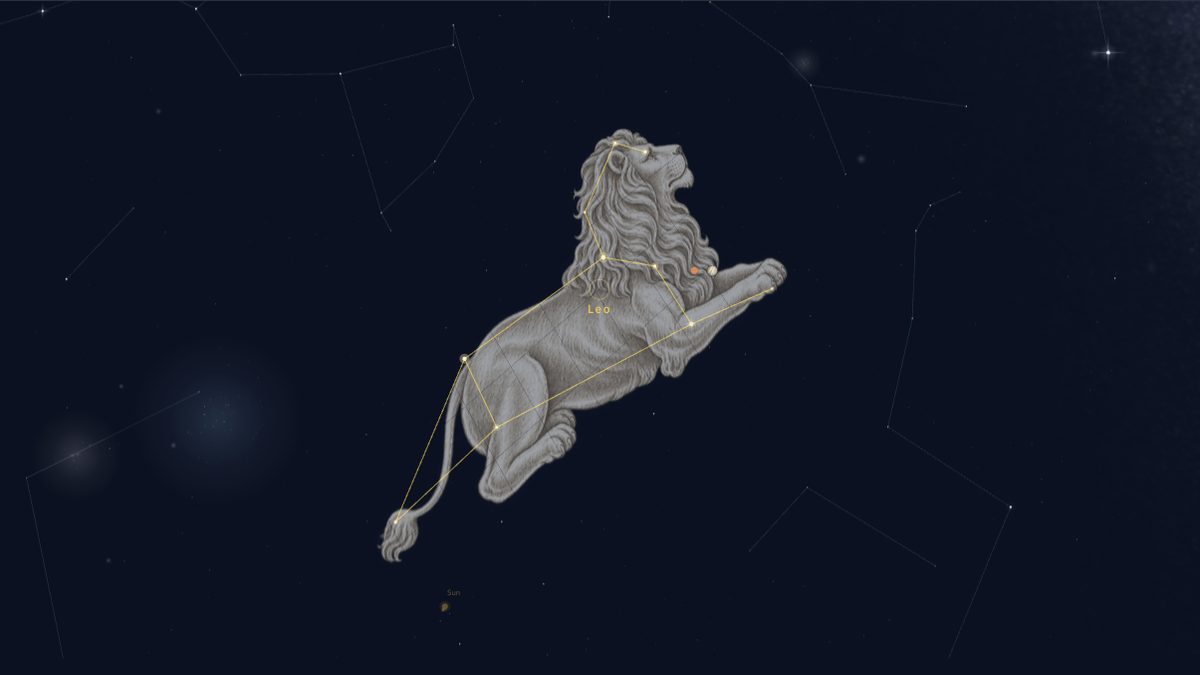
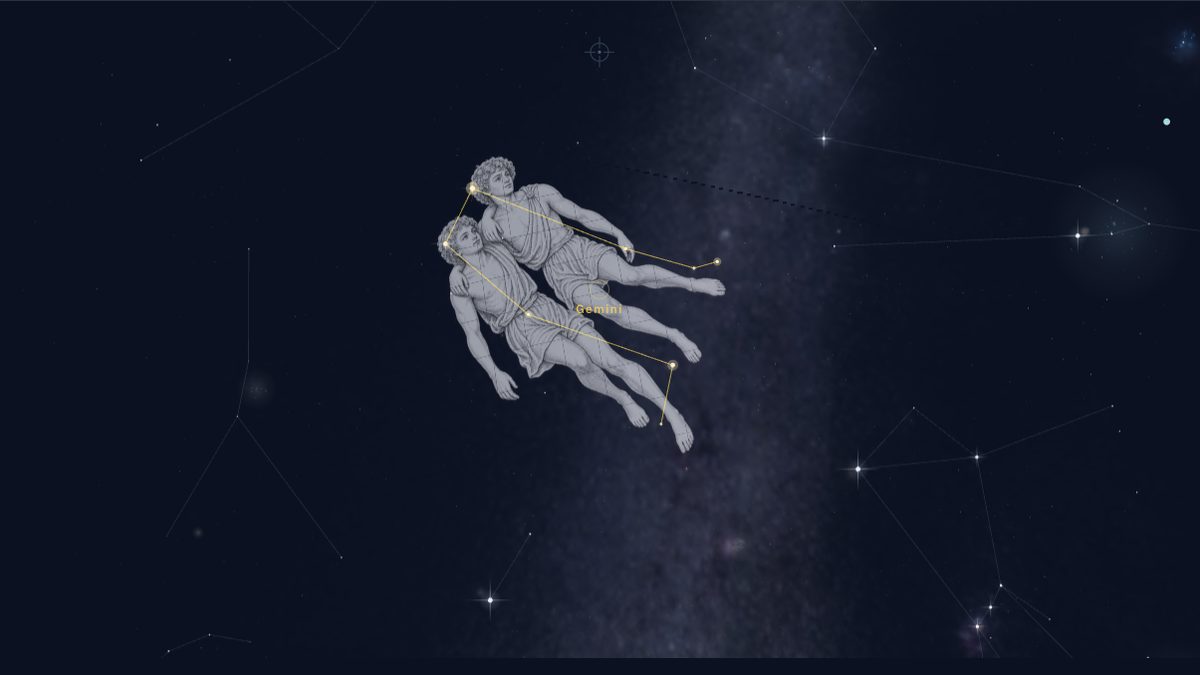
Showers are named after the constellation that holds their radiant, the point in the sky from which the meteors appear to spread out. The particles are actually travelling in parallel, and the radiant is a perspective effect, the same one that makes railway tracks seem to meet in the distance. The Leonids radiate from Leo, the Geminids from Gemini.
The number quoted for each shower is usually its ZHR, or zenithal hourly rate. It is a calculated figure: how many meteors one observer would see in an hour under a perfectly dark sky with the radiant directly overhead. Real counts are nearly always lower. Light pollution, moonlight and a low radiant each cut the number down. Using the IMO's conversion, a shower with a ZHR of 150 works out to roughly 100 an hour from a dark rural site, a few dozen from a suburb and only ten or so from a brightly lit city.
Meteor shower calendar for 2026–2027
The Orionids, debris from Halley's Comet with a ZHR around 20, peaked on 21–22 October and have just passed. This year a Moon more than 70% lit stayed up until the early morning hours, which made for a washed-out sky. The major showers over the following year look like this:
| Shower (ZHR) | Peak nights | Moonlight |
|---|---|---|
| Leonids (15) | 17–18 Nov 2026 | Sets near midnight |
| Geminids (150) | 13–14 Dec 2026 | Thin crescent, good |
| Ursids (10) | 22 Dec 2026 | Near full, poor |
| Quadrantids (80) | 3–4 Jan 2027 | Thin crescent, good |
| Lyrids (18) | 22–23 Apr 2027 | Just past full, poor |
| Eta Aquariids (50) | 5–6 May 2027 | New Moon, very good |
| Perseids (100) | 12–13 Aug 2027 | Sets about 2 a.m. |
The ZHR figures are the International Meteor Organization (IMO) reference values. Predicted peak times differ by a few hours between sources.
Some notes on the main ones:
- Leonids (November). Debris from Comet 55P/Tempel–Tuttle, hitting the atmosphere at over 70 km per second, so they look quick and thin. First quarter Moon falls on 17 November 2026; in New York the Moon sets just before midnight, and Leo's radiant climbs through the dark hours that follow until dawn. Normal rates are modest, but the shower produced a storm of tens of thousands an hour in 1966 and outbursts of thousands an hour between 1999 and 2002.
- Geminids (December). The strongest shower of the coming year. Its parent is an asteroid, 3200 Phaethon, rather than a comet, and the meteors are relatively slow at about 35 km per second, which gives many long, bright trails. In 2026 the Moon is a slim crescent that sets before 9 p.m. in New York and around 8 p.m. in London. The radiant is already up in the east by mid-evening, so the shower can be watched for most of the night, with the best rates around 2 a.m. local time.
- Quadrantids (January). Named after Quadrans Muralis, an old constellation no longer in use; the radiant lies in northern Boötes, near the end of the Big Dipper's handle. The peak is sharp and lasts only a few hours. For 2027 it is predicted for around 03:30 UTC on 4 January, though forecasts differ by two hours or so. That is before dawn in London. In New York it falls on the evening of the 3rd with the radiant low, so the pre-dawn hours of the 4th work better. A thin crescent Moon rises shortly before dawn.
- Spring and summer. The 2027 Lyrids clash with the full Moon. The Eta Aquariids on 5–6 May coincide with a new Moon, but the radiant only rises in the hours before dawn, so they favour the southern hemisphere. The 2027 Perseids come with a waxing gibbous Moon that sets around 2 a.m. in New York, leaving the last dark hours before dawn clear.
For observers in Sydney or Cape Town the picture shifts. The Geminid radiant stays fairly low from southern mid-latitudes, so rates are lower than in the north, and the Quadrantids are effectively not visible at all. The Eta Aquariids, on the other hand, are one of the better showers of the year from the southern hemisphere.
What time to watch, and where to look
Once the night is chosen, the hour matters most. Most showers are richer after midnight than before, for two reasons. The higher the radiant climbs, the more meteors enter the atmosphere above the observer. And after midnight the observer is on the leading side of Earth as it moves along its orbit, meeting the dust head-on, much as a car's windscreen collects more rain than its rear window. Even the Geminids, whose radiant is up in the evening, peak around 2 a.m. when Gemini is highest.
The best direction is not straight at the radiant. Meteors appear all over the sky, and those right next to the radiant are coming almost straight at the observer, so they look short. A patch of sky 30 to 50 degrees away from the radiant and at least halfway up from the horizon shows longer trails. A fist held at arm's length covers about 10 degrees, so three to five fists away from the radiant is about right. The darkest part of the sky matters more than the exact angle.
To check whether a meteor belongs to the shower, trace its trail backwards. If the line runs back through the radiant, it is a shower member; if not, it is one of the sporadic meteors that fall on any night of the year.
The NowSky sky view shows in advance when the radiant constellation rises and how high it gets. Setting the location to New York, moving the date to the peak night and stepping the time forward shows Leo rising in the east around midnight and standing high in the southeast before dawn.
How to watch a meteor shower: what to bring
Meteor showers are one of the few sky events that need no telescope or binoculars; a narrow field of view only gets in the way. What helps is anything that makes it comfortable to lie back and take in a wide sweep of sky for a long time.
- A reclining chair or a ground mat. Standing with the head tipped back is hard to keep up for more than a few minutes.
- Warm layers. November to January nights in the northern hemisphere get cold, and lying still makes it feel colder. A blanket, hand warmers and a hot drink extend a session considerably.
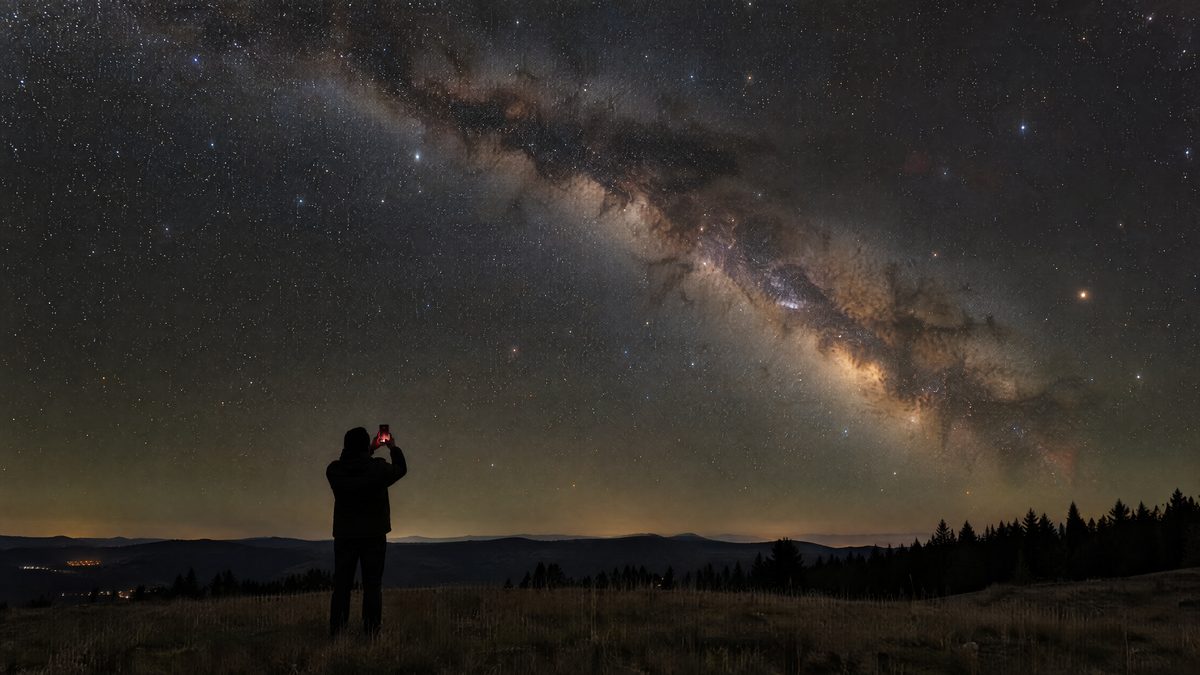
- A red light. White light undoes dark adaptation instantly. If a phone is needed, turn the screen brightness to minimum.
- Time. Eyes take 20 to 30 minutes to adapt fully to the dark, so plan on at least an hour.
Meteors arrive unevenly: several minutes with nothing, then two or three in quick succession. A park or open field on the edge of town is a clear improvement over a city centre, and even half an hour's drive towards darker skies raises the count noticeably.
Frequently asked questions
Can a phone photograph a meteor?
Bright ones, yes. Fix the phone on a tripod, use night mode or a manual long exposure, and shoot continuously; out of dozens or hundreds of frames, a few will catch a meteor. Most meteors are too faint for a phone sensor, though, so far fewer appear in photos than the eye sees.
Is the shower the same in the southern hemisphere?
It depends on where the radiant is. Showers with radiants far to the north, such as the Quadrantids and Perseids, are poor or invisible from Sydney and Cape Town, while the Eta Aquariids are better there. Showers with radiants not far from the celestial equator, such as the Orionids and Geminids, can be seen from both hemispheres, although the Geminid radiant stays low from the south.
Final thoughts
The core of any meteor shower calendar is not just the date but the hour and the Moon: pick the dark hours after moonset when the radiant is high, find somewhere away from lights, and take in the whole sky. In 2026 the Geminids line up with a nearly moonless sky, and if I could go out for only one shower in the coming year, that would be the night I chose.
Open the screens from this post
- See your sky nowSky view for your location and time
- Find GeminiThe December shower's radiant